This article appears in the Winter edition of WEBA News, our quarterly printed newsletter. Thanks to all those who spent time on the phone to me, enthusing about working and worshipping with people with learning disabilities - and to those I didn't even get round to speaking to. Please add comments about your own church's experiences!
Ruth
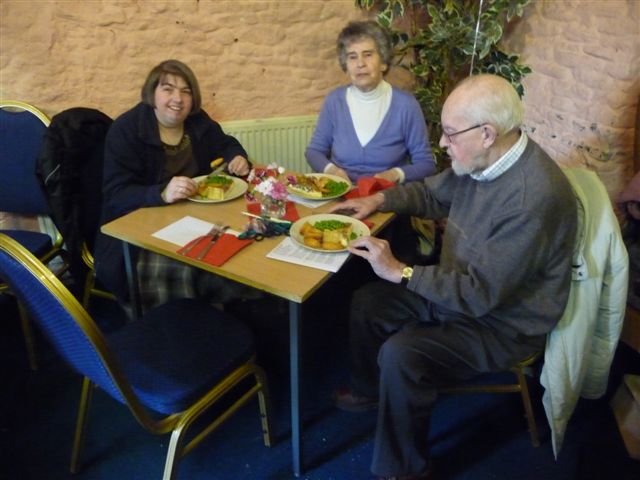
It’s Sunday morning in the Crown Inn in Minchinhampton. Rose, the landlady, serves regulars on one side of the bar, some of them watching a group from the local Baptist Church on the other side, who are just finishing a Bible Study. This group now head to the function room at the back of the pub, ‘the barn’, where another group of adults have been busy with a hands-on activity. Now everyone moves to separate tables for prayer. After this, there’ll be a cooked lunch, and Rose, who provides the room for free, will also do all the washing up, simply because she thinks that “it’s wonderful what you’re doing in there.”
This is Specially 4 U, a group run by Minchinhampton Baptist Church in Gloucestershire, and it is only one of many similar groups around WEBA. They are responding to the social and spiritual needs of one of the largest unreached people groups in our country—those with learning disabilities. The group leaders I have spoken to all agree on one thing— serving this particular group of people brings benefits to a much wider circle, both within the church family and outside.
Specially 4 U began as part of a fresh expressions initiative at Minchinhampton Baptist Church, and it has continued at the pub, running alongside the usual Sunday morning service. John Barnard, who has always fought for his own daughter to be recognised as an ‘ordinary’ person, is one of the organisers. He explains that the Bible Study in the bar came about was included for those not involved with the activities.
“We’ve had people from church come along who are obviously in a bad place—people feel more comfortable here.”
Many participants come with carers, often from residential homes. “The carers used to sit and read newspapers”, says John. “Now they join in.”
While the Crown is a fantastic venue for these services, its size means the group’s outreach is restricted—they can’t go out and actively invite more people living in the community. John feels that they will need to move back to the church building eventually, and would like the church to make this a more integral part of what they do.
John admits there can be a tendency for churches to be more comfortable isolating these groups from the congregation— “people think something is going to happen they can’t cope with” - whereas actually those with ‘learning disabilities’ can help us overcome some of the inhibitions that limit our services. Group members at Specially for You often interact with the Bible story by contributing stories of their own. When the music group sings, others tend to come to the front and sing with them. After this, he says, “you know that ‘ordinary’ church will be less of a spiritual experience for you.”
Jacky Newman’s son Tim has Downs Syndrome, and when she wondered what to do about the fact that he just didn’t fit in to the youth group at Southwick Baptist Church, she realised that here was a vast group of unreached people. She has now been leading their No Limits group for about thirteen years. The group meets three times a month on a Tuesday— two of those are social evenings, and one is a time of worship and sharing. There are about 16 group members, six of whom are active church members, and several have been baptised.
Jacky, too, remarks on the spiritual benefits of worshipping and learning with those with learning disabilities— “they come up with things you’d never thought about” - and that this kind of mission reaches a wide circle of people outside of the church: “The group has attracted more people into the church, and for some people it gives them a role within the church—something they can do.”
Gordon Cloud, who runs the Build Club at Clarence Park Baptist Church in Weston-super-Mare, agrees with this:
“I think what we do with Build is probably the best outreach thing we do in the church. It’s the fringe people—carers, houses, families—they’re seeing that the church is a caring place to be.” This group has also been running for about 13 years, and has the same format of two social events and one Bible Class every month. The group puts on its own outreach events—a concert with cream teas, a Christmas party. They are a well integrated part of the church family and take part in services, running two or three songs and doing readings.
Gordon is convinced that many churches are missing this opportunity to serve Christ and their communities. While many people with learning disabilities enjoy church and see it as an accepting place, they could be catered for more specifically:
“I think there’s a place in every church for a group of this sort, the way you have a group for children. Churches cater a lot for children but they don’t always cater for people with disabilities.”
Getting Started
- The Build Club at Clarence Park is named after the support organisation of that name—the Baptist Union Initiative with People with Learning Disabilities. They offer conferences, a twice yearly newsletter, resources, and support and advice. We’ve enclosed a BUild flyer with this newsletter, or you can contact David Buckingham on 01782 618966 to find out about joining.
- Causeway Prospects is an ecumenical organisation dedicated to providing “advice, training and resource materials to equip churches for effective ministry and outreach among people dearly loved by God and often marginalised by society” Their website is www.prospects.org.uk or you can contact them on 0118 951 6978.
- Several of the people who we interviewed for this article are more than happy to chat about what you might be able to do at your church:
- · Gordon Cloud can be contacted by email at gordon.cloud@googlemail.com or on 01934 628312. He would be willing to undertake informal training with people from local churches.
- · Sue Wright also worked with the Clarence Park Build Group and now serves on the Build Committee. “We need the churches to know there are people with a wealth of experience they can come to” she says. You can contact Sue at davidsue@headland1.plus.com or on 01934 420719
- · If you’re starting with very few group members and want to find more, it’s possible to get the group listed with Social Services. People with learning disabilities and their carers put together a care plan which includes ‘spiritual development’ - social services may be grateful for a group they can refer people to.
- · If you’re in Bristol, and your church needs a cleaner, you could offer a local person with Learning Disabilities the dignity and satisfaction that comes with work. A Clean Sweep is a co-operative owned and run by people with Learning Disabilities, and supported by Mencap. Contact them on 0117 9653492, or see the WEBA website opportunities page for more contact details.